Young women have reported being given what they believe were knockout drugs before being sexually assaulted at the Country Thunder music festival on the Illinois-Wisconsin border in past years, which begs the question:
How can organizers or police at the multi-day outdoor festival, or any other events, stop people from bringing in and using “roofies” or other date-rape drugs such as GHB?
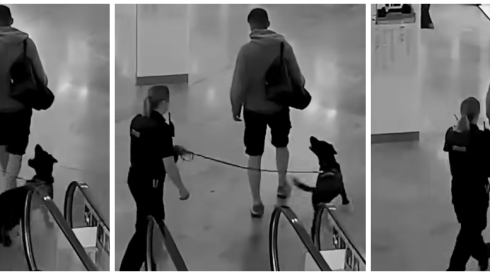
There may be no single or easy answer, but overseas, police are trying a new tactic: training canines to sniff out drugs known to be used significantly in facilitating sexual assaults.
The Thames Valley Police in England have started training their dogs to identify such drugs and begun using them in patrols to not only catch offenders, but serve as a deterrent, officials said.
“These are planned offenses,” said the police department’s Sgt. Lath, who asked that his first name not be used. “So it’s really about turning the tables” on offenders, “going out and looking for them.”
Part of the aim is also to “let people know this is a new tactic,” and that “we’re out proactively,” Lath said. “We’ll quite often go into pubs and clubs.”
“The dogs have proven successful,” he said, adding they’re trained to detect an array of drugs, with the most common “spiking” substances now among them.
If an illegal substance is sniffed out, there’s “a change in behavior” with the dog that the handler watches for, Lath said.
His agency is discussing this canine program with other British police departments interested in possibly following suit.
In the United States, privacy laws and practices can differ, along with crime patterns, and police resources and priorities — and local policing agencies don’t appear to be embracing the concept, at least not yet.
“At this time, our canines do not sniff for drugs that may be used in sexual assaults,” a Chicago Police Department spokeswoman said.
“CPD’s canines are trained for various duties that include building searches for hidden offenders, locating missing persons, tracking suspects who have fled the scene of a crime, performing article searches, detecting narcotics or explosives, and conducting public service canine demonstrations.”
“At this time, we have approximately 60 canines.”
The Cook County sheriff’s office has about two dozen dogs, “of which a little more than half are certified by the state to detect the following four substances and their derivatives: cocaine, heroin, methamphetamines and cannabis. The first three substances are illegal with no carve outs for medical or therapeutic use, and cannabis has strict laws governing legal possession, quantity and use.”
“The sheriff’s office does not train its K9s to detect drug compounds that may be legally possessed for legitimate medical or therapeutic use. There are significant Constitutional and legal restrictions on how and when K9s may be used even when deployed to search for illegal narcotics they are certified to detect, and these restrictions would be even tighter if the substances K9s are asked to detect have legitimate legal uses.”
“Ketamine and GHB, which are two of the three drugs often considered ‘date rape’ drugs, can be legally prescribed in the U.S. The third, Rohypnol, cannot be prescribed, but is in the benzodiazepine class of therapeutic drugs and is chemically similar to Xanax, Valium, Klonopin, and other commonly prescribed drugs used to treat anxiety, sleeplessness and withdrawal.”
A spokeswoman for the Illinois State Police said: “ISP canines are not trained to detect ‘date rape drugs.’ Canines are currently focused on detecting (imprinted on) methamphetamine, heroin, cocaine and crack cocaine.”
“We are not aware of law enforcement agencies in the U.S. training and utilizing K9s to detect date rape drugs. ISP is consistently having discussions about how best to utilize the resources available to us in the pursuit of justice. Please note, ISP K9’s main jurisdiction and focus is on drug interdiction along highways and major routes across Illinois.”
The State Police has about 70 canines statewide.
Use of knockout drugs in sexual assaults has been a major concern for years. More recently, in at least one of the cases involving reports of sexual assaults at University of Chicago fraternity houses, allegations surfaced that the victim drank alcohol that might have been spiked. In that case, a woman told Chicago police she feared she was drugged before being sexually assaulted at the Alpha Delta Phi house in February.
Some experts say it’s worth exploring whether to broaden the drug menu the dogs are trained on, noting it’s not that difficult to add one or more compounds to the training mix.
Brandon Parker, founder and CEO of Rockford-based MPIK9 that trains police and security dogs, said: “Would it be effective here? Yes. Is it being used here? Not that I know of.”
He added, “It’s a good idea.”